


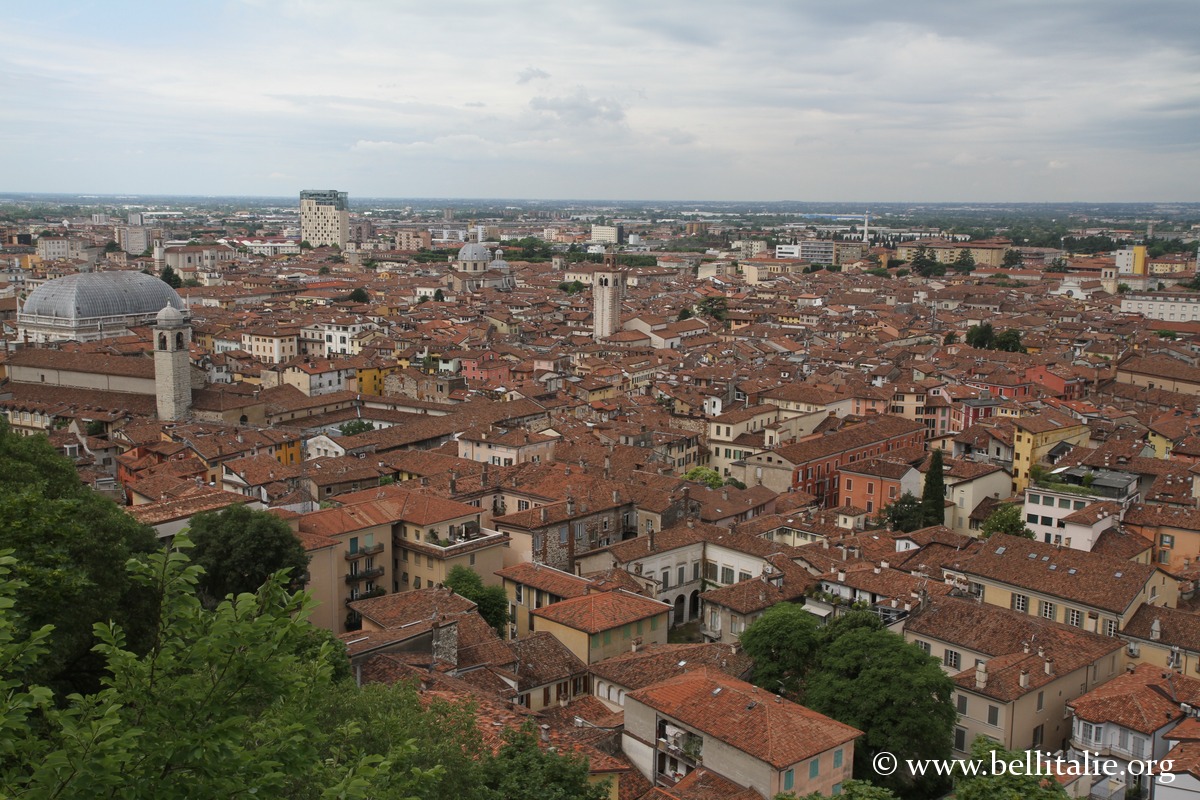
Built on the Cidneo hill overlooking the city, the Brescia Castle is a vast fortified complex, and now a pleasant park with its greenery and panoramas.
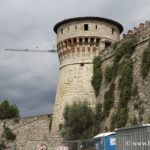
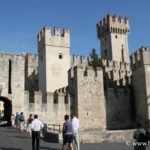
The defensive structures are well preserved and date mainly from the 14th-16th centuries, including the keep, the powerful Prisoners’ Tower, the drawbridge and the Mirabella Tower which dominates the whole.
The castle is protected by massive ramparts with a monumental gateway from the era of the Venetian domination which lasted four centuries.
Archaeological evidence dates back to the Celts and the Roman presence with, for example, stone vats for storing oil, medieval remains, etc.
Two museums are housed here: the Luigi Marzoli Arms Museum and the Museum of the Risorgimento Leonessa d’Italia. It is also the site of an old astronomical observatory, and some railway pieces are exhibited, including a steam locomotive from 1909.
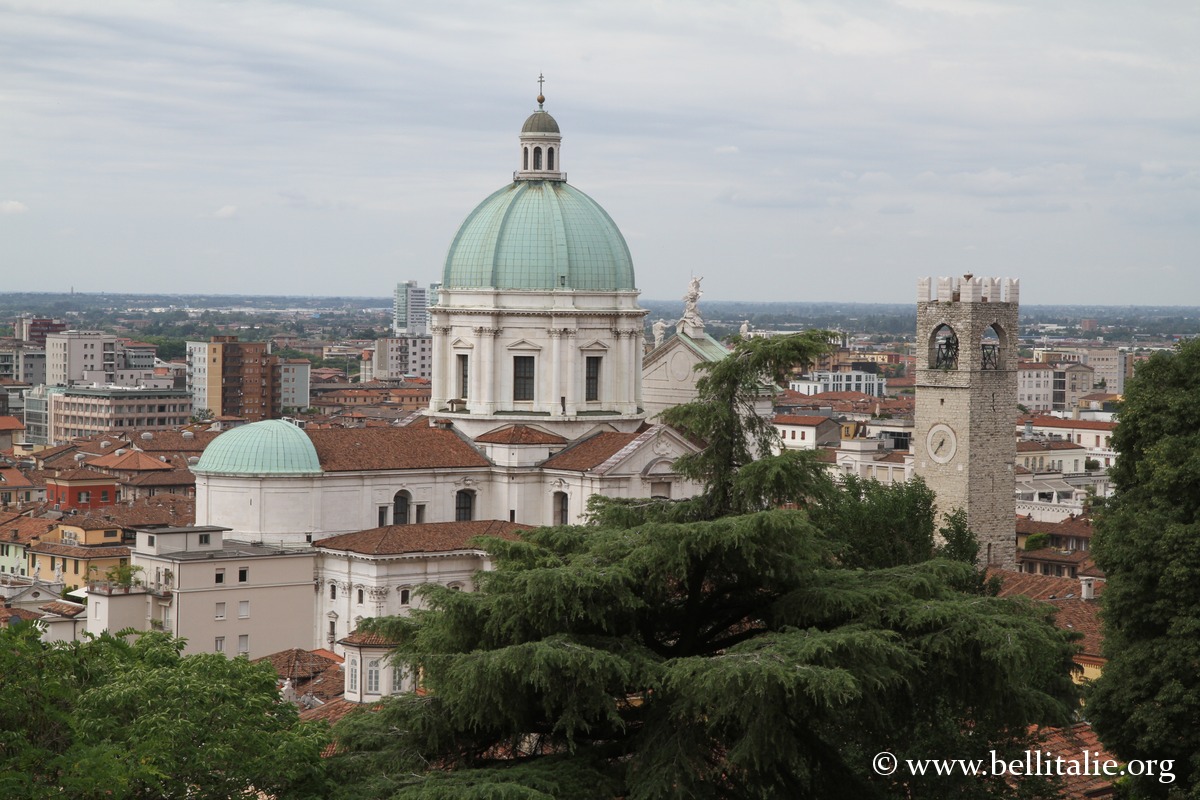
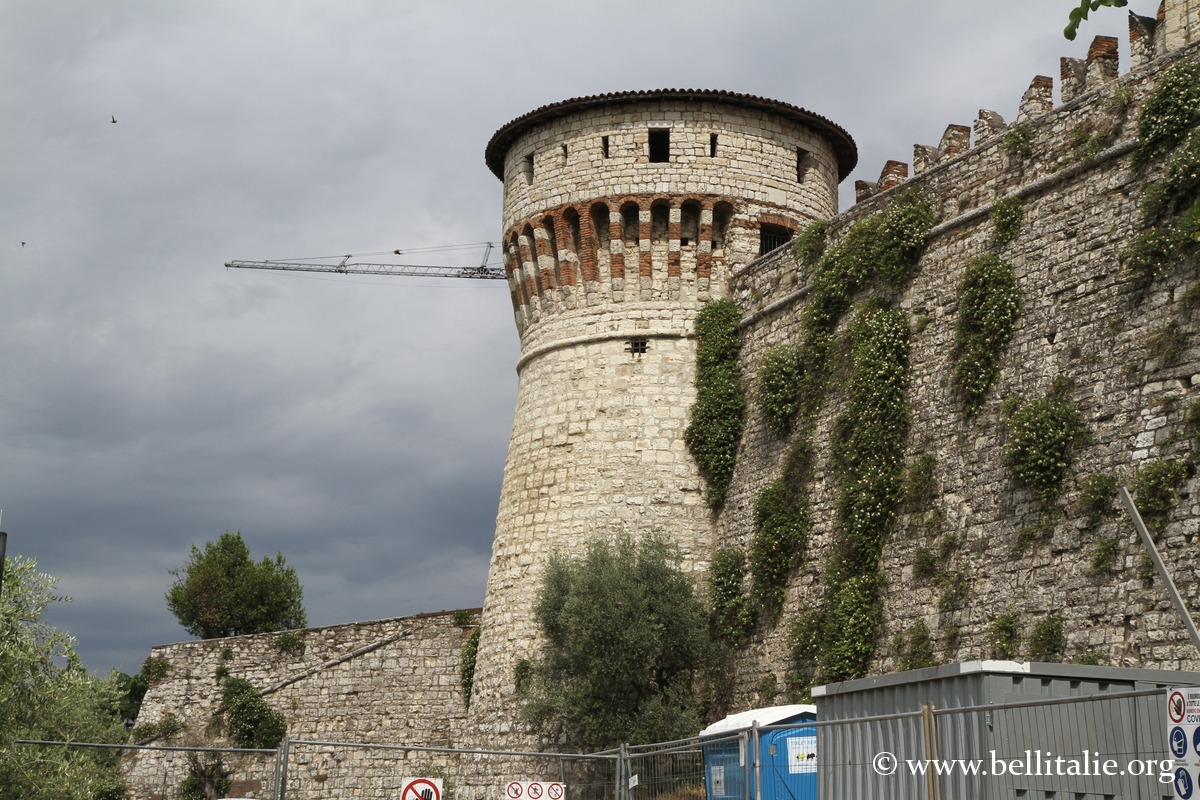
History of Brescia Castle
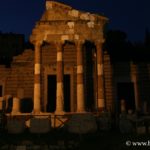
The oldest finds on the hill date back to the Iron Age, when the Celts, Ligurians and then Cenomani probably had a place of worship there. The Romans maintained a sanctuary there with several temples, of which some steps remain in the Arms Museum. The underground passages have also preserved stone vats, some of which were used for storing oil. The foundations of the Mirabella Tower date back to the end of the Roman imperial era, and nearby was an early Christian place of worship.
The Lombards were at the origin of the first defensive complex.
Around the 12th century churches were erected, the most important of which was Santo Stefano in Arce. Only its base, portions of walls, and one of the two bell towers which was converted into the Mirabella Tower remain.
The Visconti reworked the castle and built the Mastio above the Roman temple and its deposits, from the period to which the frescoes still visible today date.
The Venetians modernized and greatly enlarged the structure, including the Prisoners’ Tower and the Coltrina Tower. A short French occupation nevertheless left modernized military works, notably the Tower of the French. Then the Venetians built the enclosure with the bastions, installing new gun ports, but also warehouses, barracks, religious buildings, cisterns, powder magazines, etc.
Under the Napoleonic period, the castle served mainly as a prison, then the Austrians consolidated it afterwards.
From 1859 and the Kingdom of Italy the castle served as a barracks and the keep as a military prison.
In the 20th century it was converted into a public park with the 1904 Expo, except during the wars when it again had military or defensive functions.
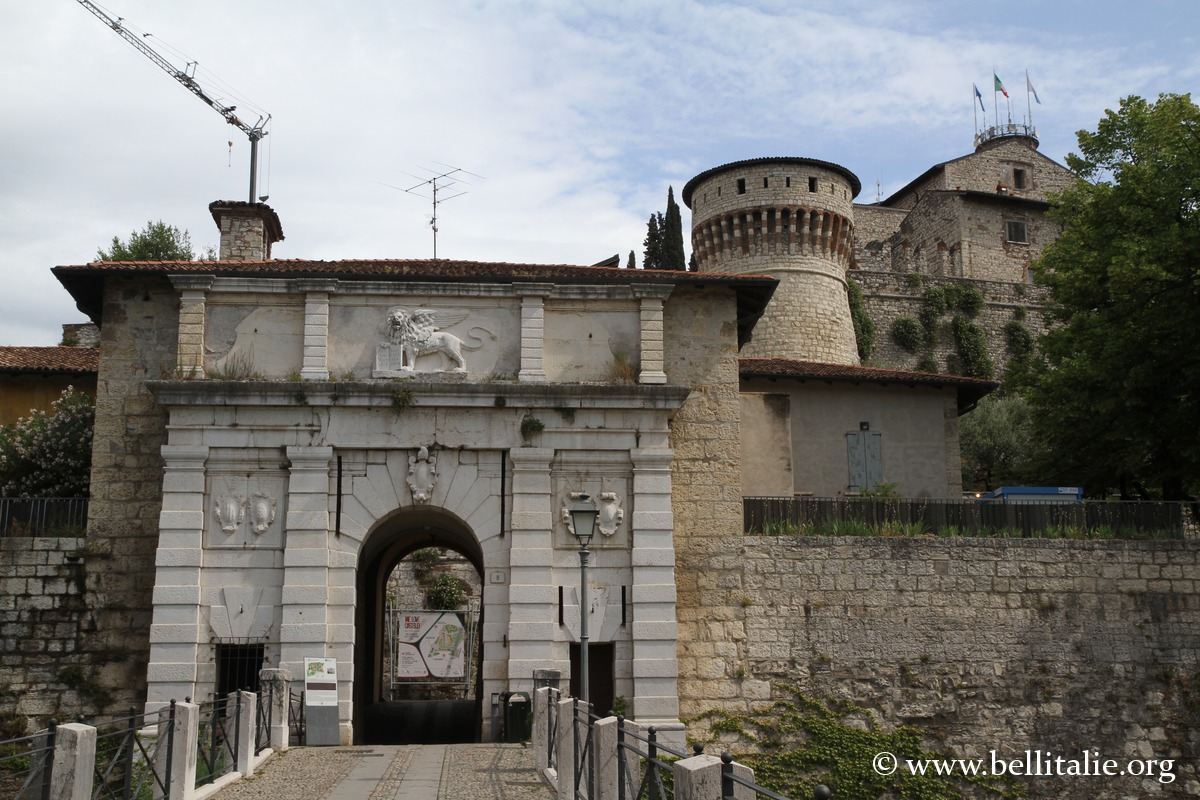
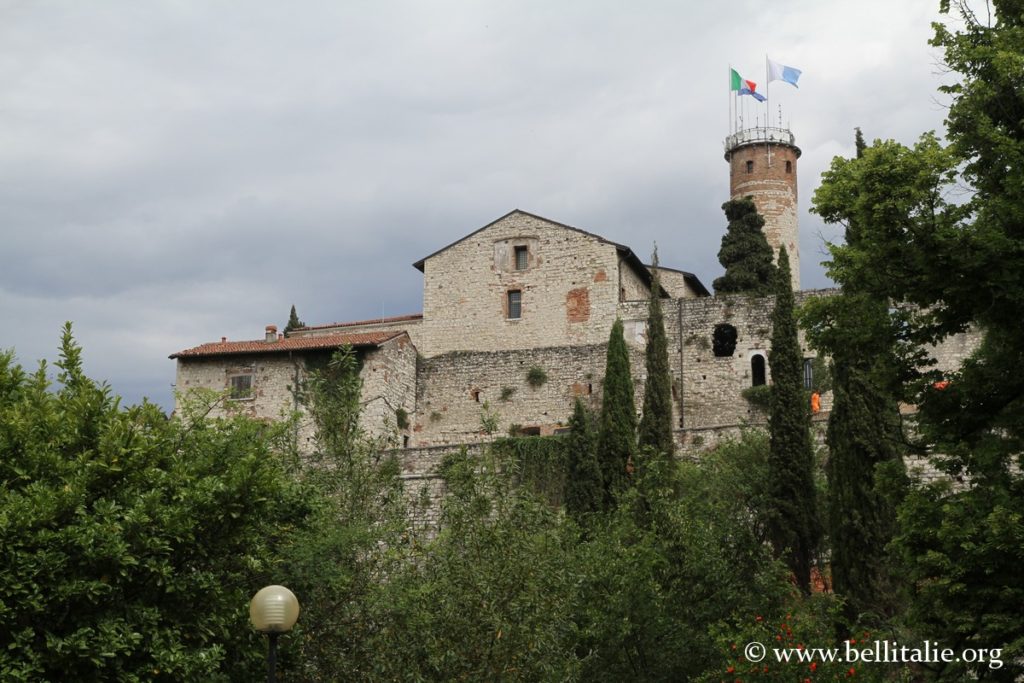
Luigi Marzoli Arms Museum
Within the 14th-century Visconti Mastio, the Luigi Marzoli Arms Museum houses an important collection of armor and ancient weapons, documenting in particular the evolution between the 15th and 18th centuries.
Museum of the Risorgimento Leonessa d’Italia
The Museum of the Risorgimento Leonessa d’Italia recently reopened after twenty years of closure, with a new exhibition route telling the story of the Risorgimento, with paintings, sculptures and memorabilia, and a digital collection accompanying an interesting narrative route.
It consists of eight sections, narrated in Italian and English.
The Ten Days of Brescia
In 1849, in the midst of the Risorgimento period, the Ten Days of Brescia took place, where the people who had organized clandestinely since 1848 around Tito Speri and the priest don Pietro Boifava, triggered on 23 March 1849 a rebellion against the Austrian Habsburg rulers.
The fierce fighting lasted for 10 days, the Brescians taking the houses one by one, occupying streets, barricades or bell towers, facing the Austrians entrenched in the castle who did not hesitate to bombard the city. The surrender of the Brescians took place only on 1 April 1849, with the arrival of Marshal Haynau come to reinforce the Austrians.
The repression was violent, with a bloodbath, many insurgents and civilians were shot.
The courage and valor of the Brescians has since remained in memory, associating with it the name “Leonessa d’Italia” (Lioness of Italy) which appeared in a song in 1877 and which is now attached to it.
Information
- Wikipedia articles: Brescia Castle, Ten Days of Brescia
- Tourist portals: www.bresciamusei.com
Map
If you see this after your page is loaded completely, leafletJS files are missing.




Comments