


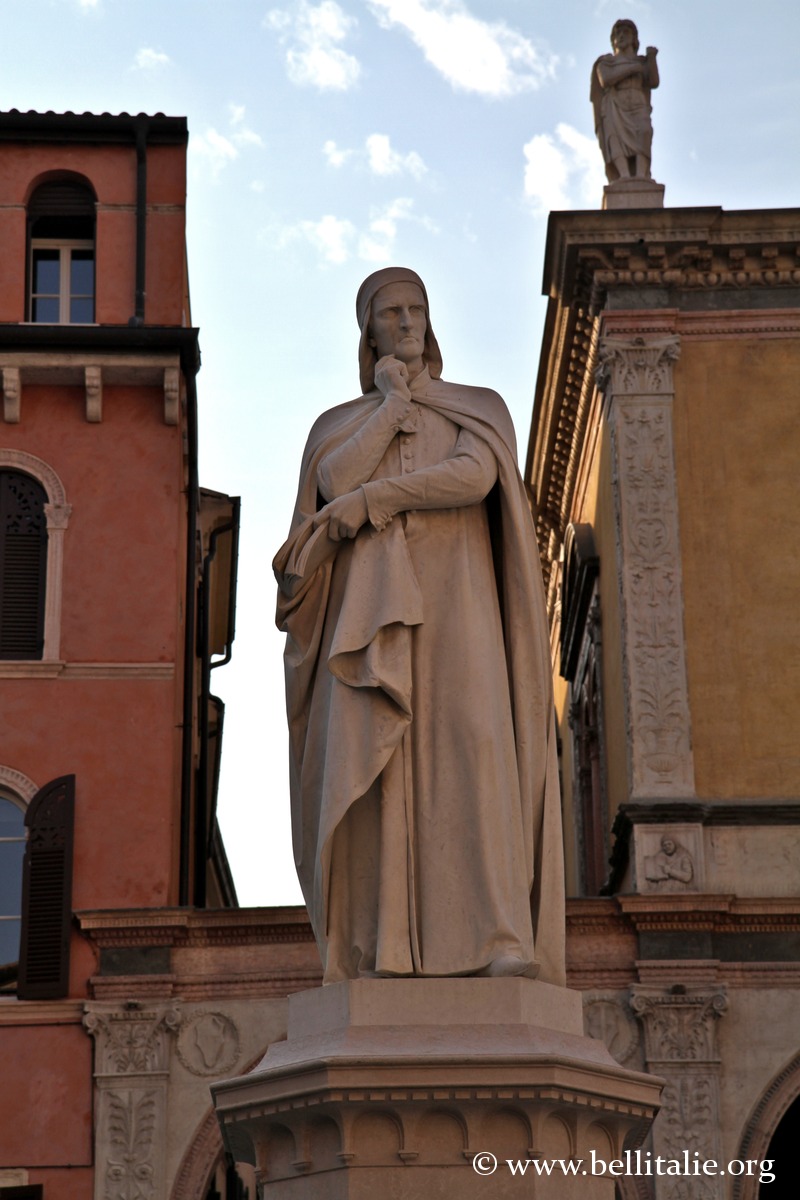
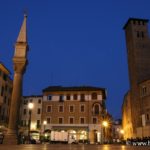
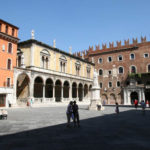
Near the Piazza delle Erbe, the Piazza dei Signori is also called Piazza Dante because of the statue of the famous poet.
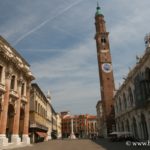
It is a beautiful small rectangular square surrounded by superb medieval palaces that were the city’s first lordly residences, linked by arcades and passages, including the Palazzo della Ragione from the late 12th century with its Cortile del Mercato Vecchio, the Palazzo del Capitano, the church of Santa Maria Antica, and the Palazzo del Podestà. The entrances to the square pass through arches such as those framing the Palazzo Domus Nova
with the Via della Costa on its left.
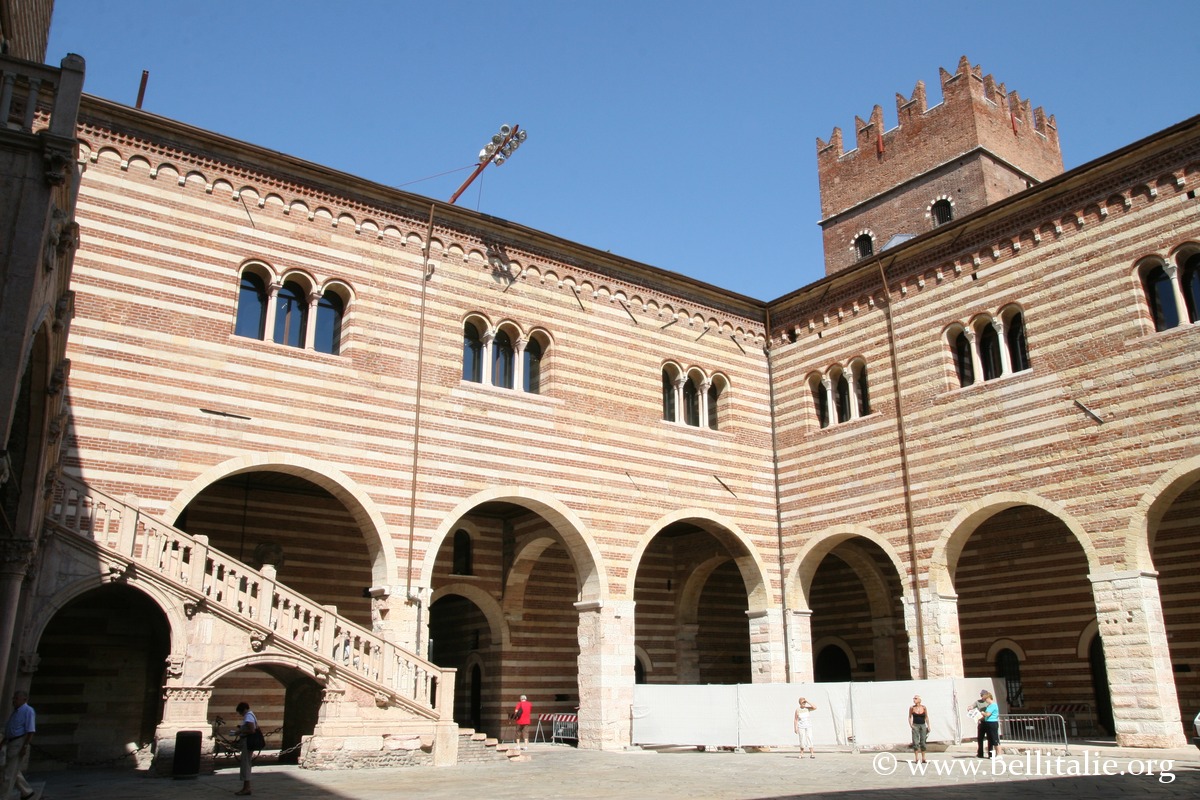
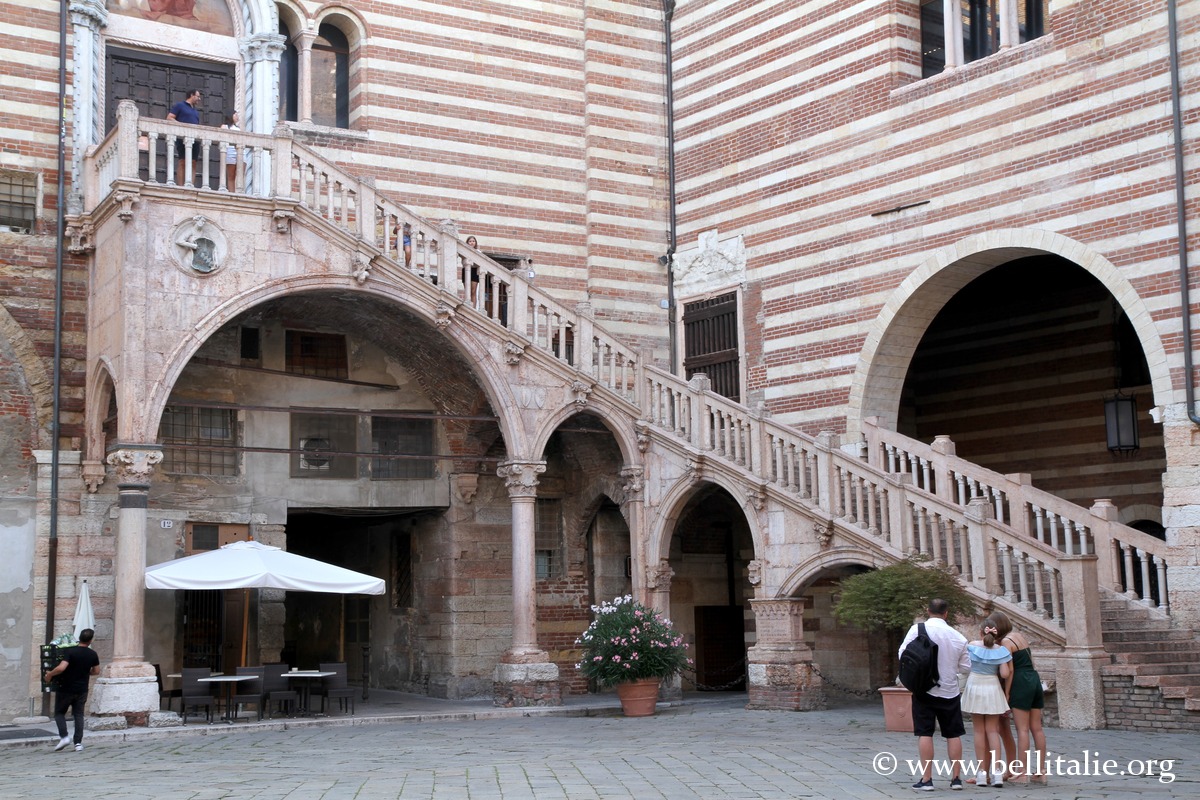
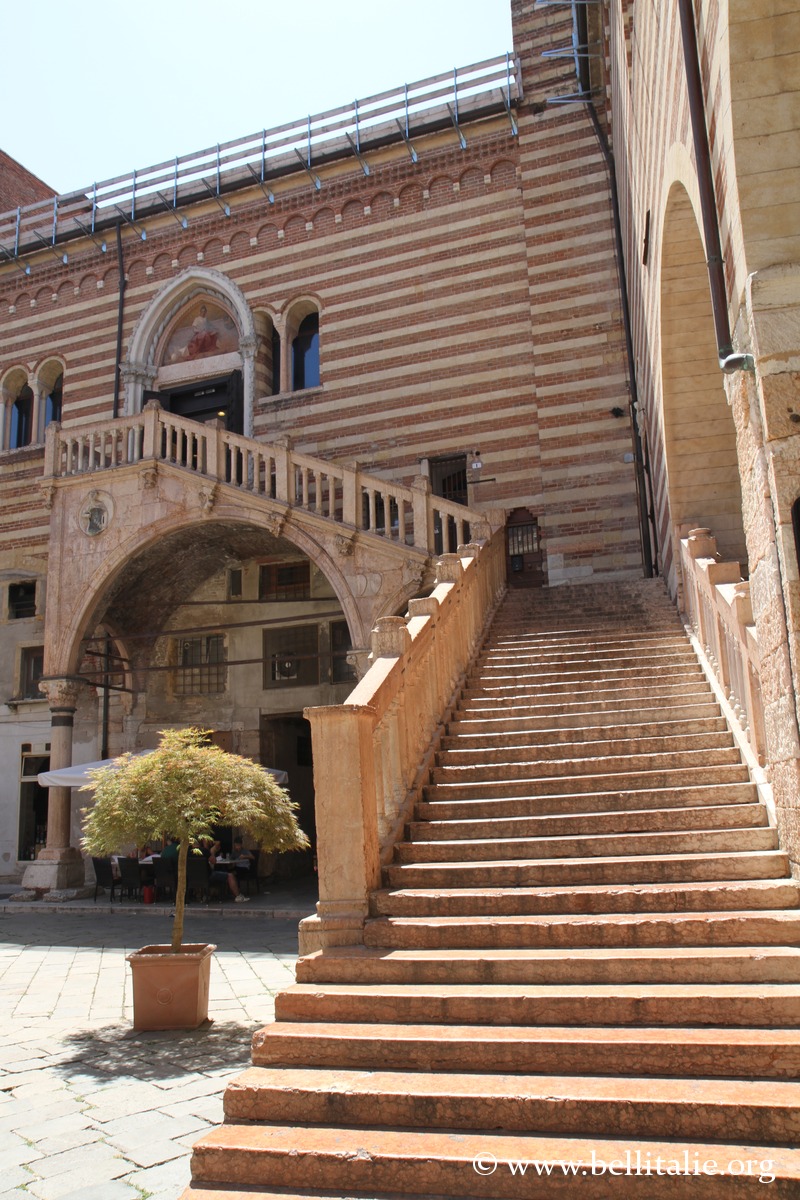
Piazza dei Signori and Cortile del Mercato Vecchio
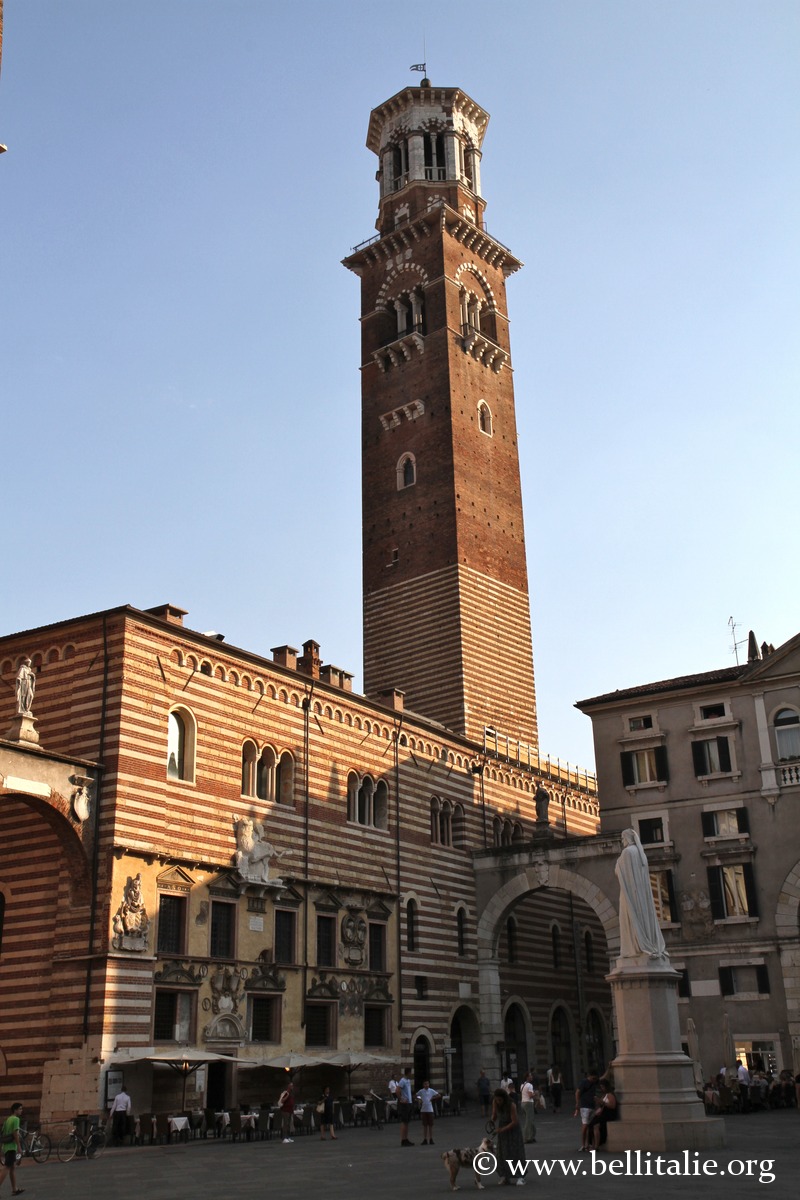
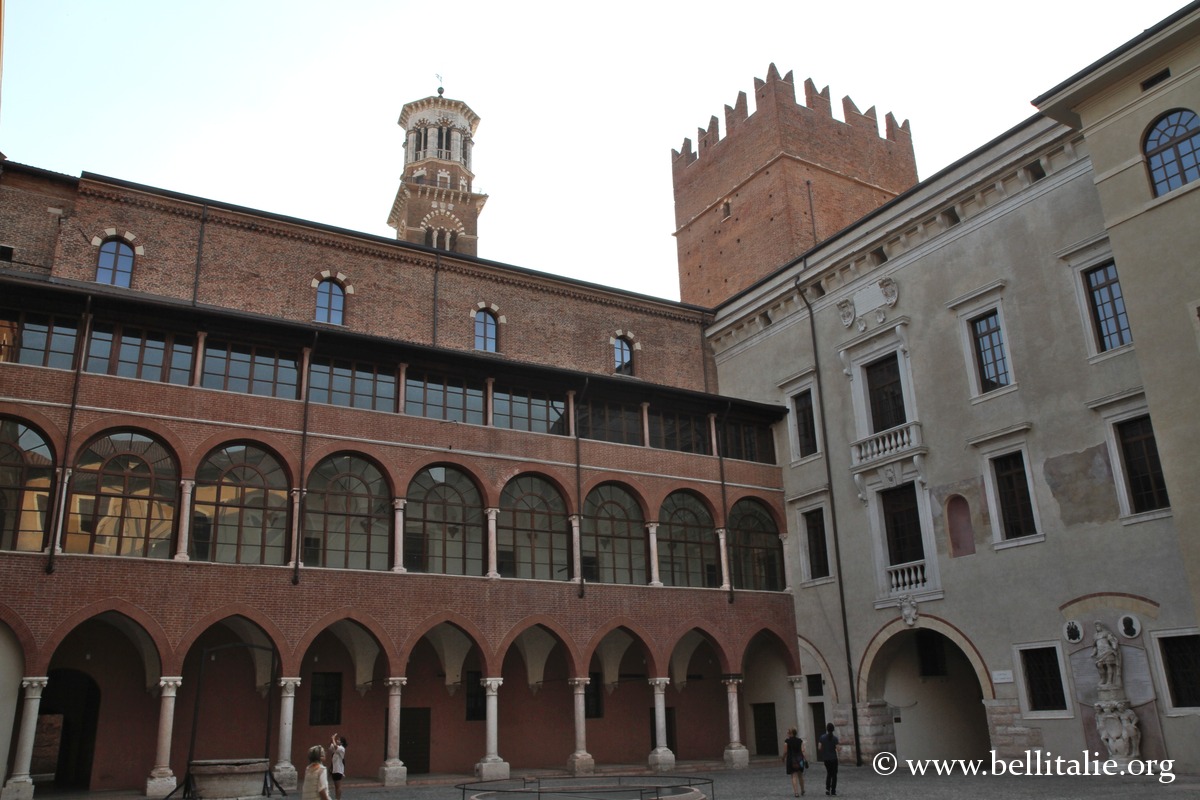
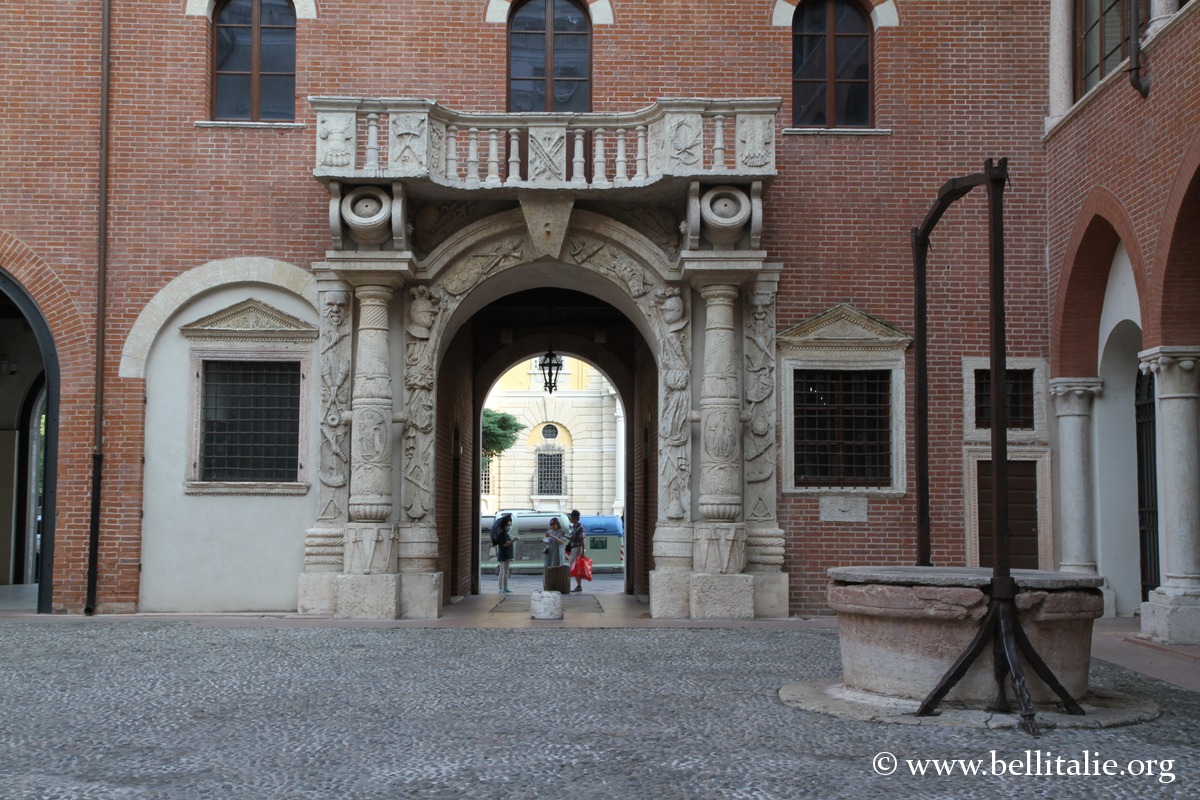
The Palazzo della Ragione from the late 12th century had four towers, the largest of which is the Torre dei Lamberti. Next to the tower, an arch leads to the Cortile del Mercato Vecchio (Courtyard of the Old Market), with the splendid Scala della Ragione, built of red Veronese marble.
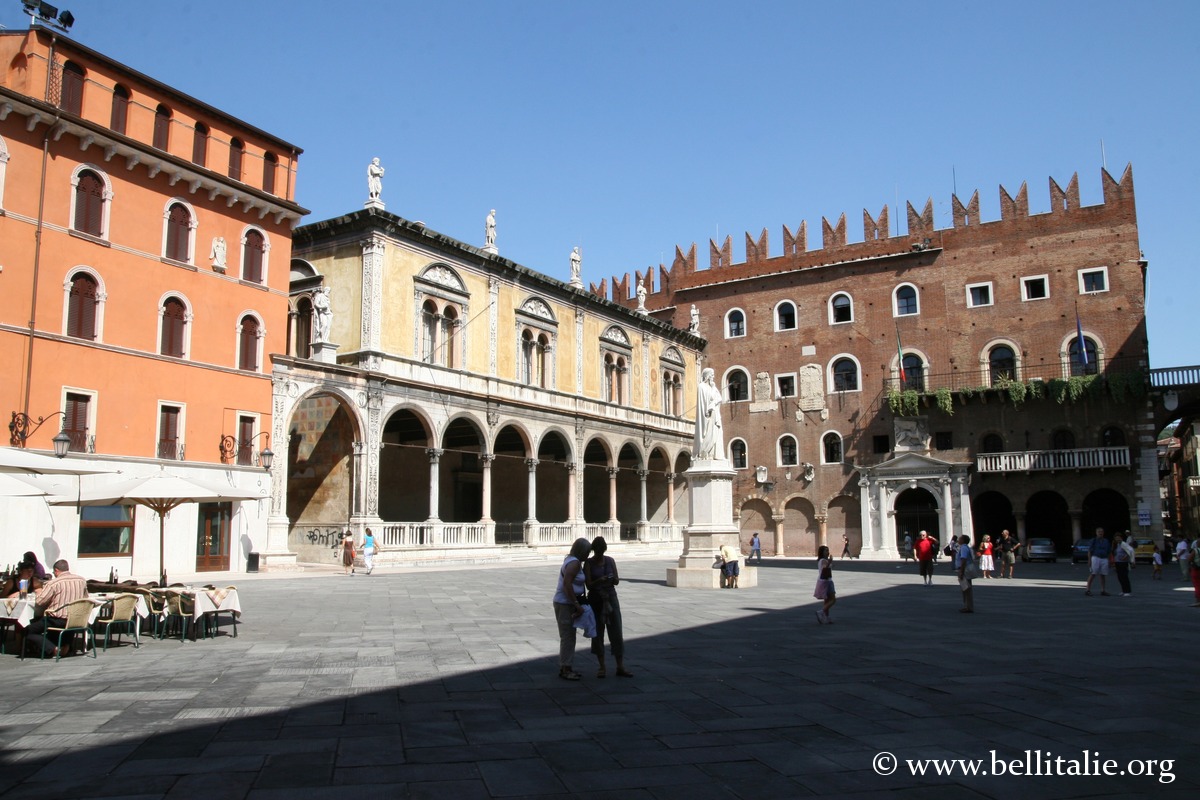
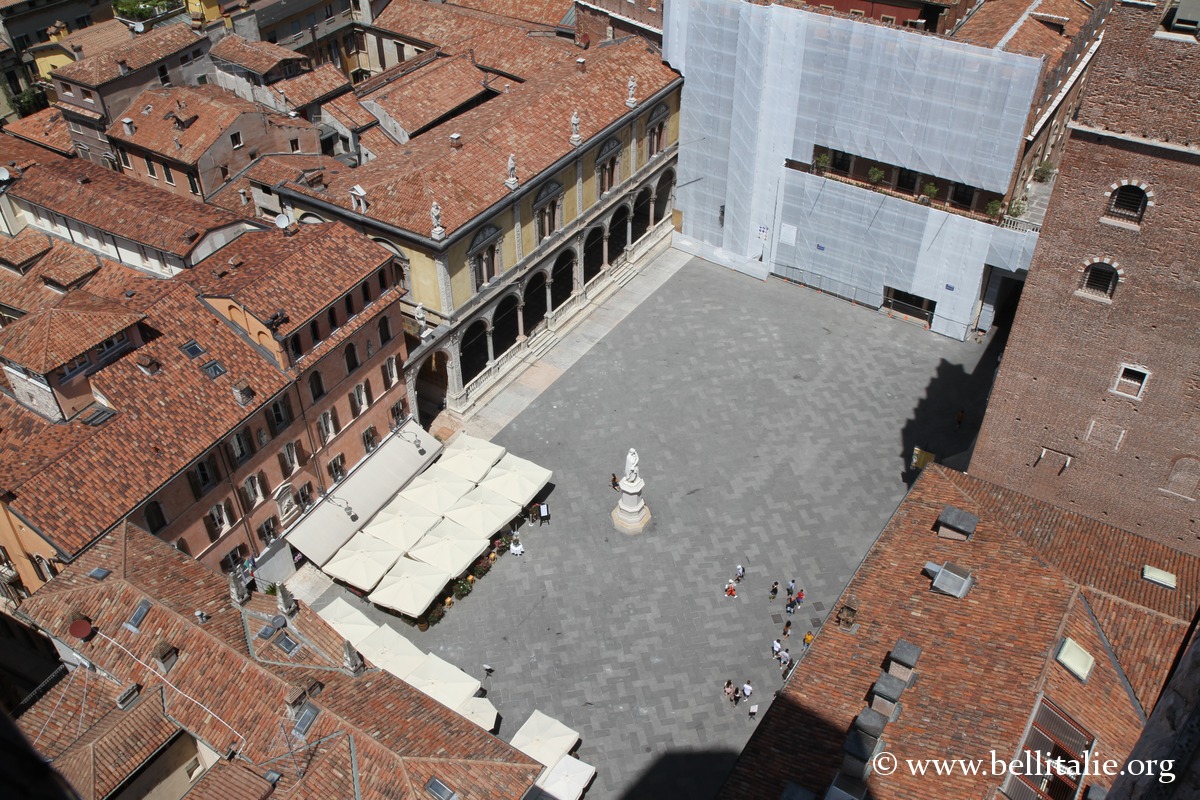
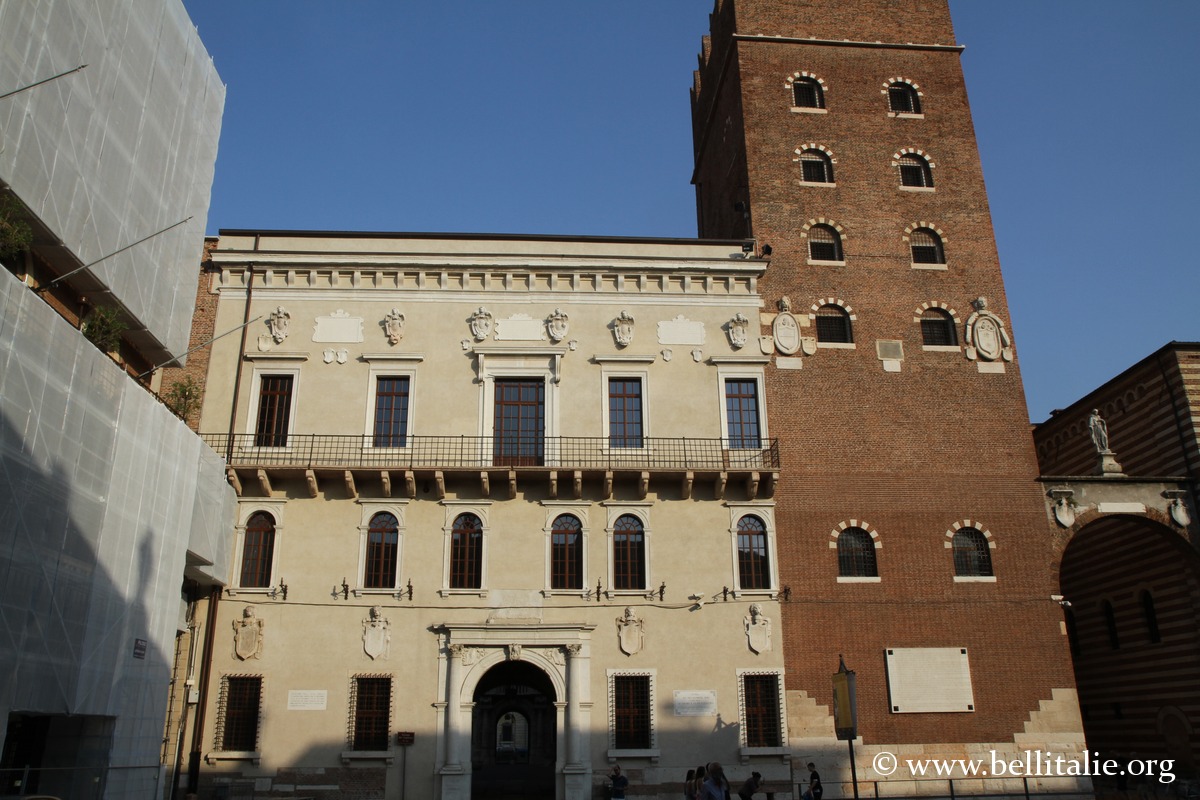
The Palazzo di Cansignorio, also known as the Palazzo del Capitano, was remodelled with a 16th-century façade and the Porta dei Bombardieri of 1687, but the corner tower, linked by an arch to the Palazzo della Ragione, remains from the Middle Ages. It was the seat of the political power of the Scaligeri and the Venetians.
The Palazzo del Podestà (14th-15th century), near the church, was built by the Scaligeri, with its typically Ghibelline battlements. In 1404 the Venetians opened a new portal and added the Lion of Saint Mark above it.
The Loggia del Consiglio, with its associated palace, was also called the loggia of fra’ Giocondo. It was intended to host the meetings of the Patrio Consiglio, built in 1476.
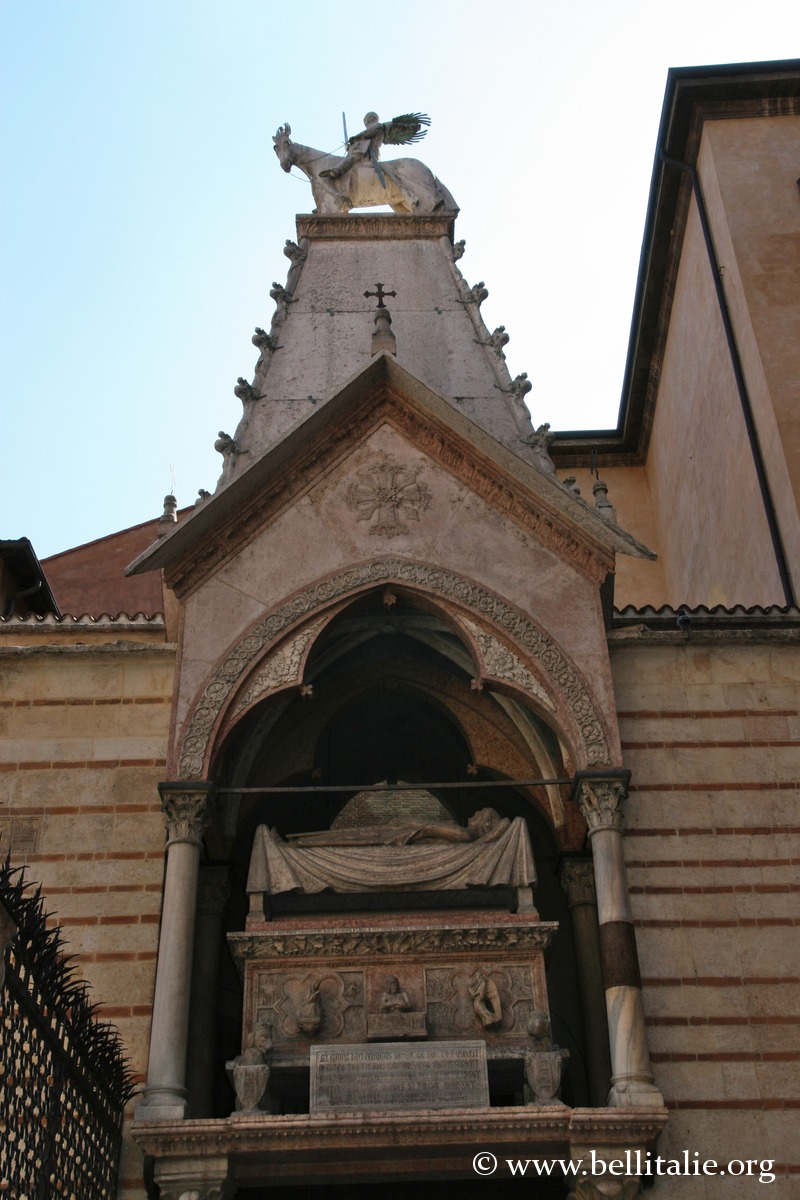
A passage leads to a square with the Romanesque church of Santa Maria Antica, a small church with the sarcophagus of Cangrande I della Scala in front of the portal and the other Scaligeri tombs.

Scaligeri Tombs
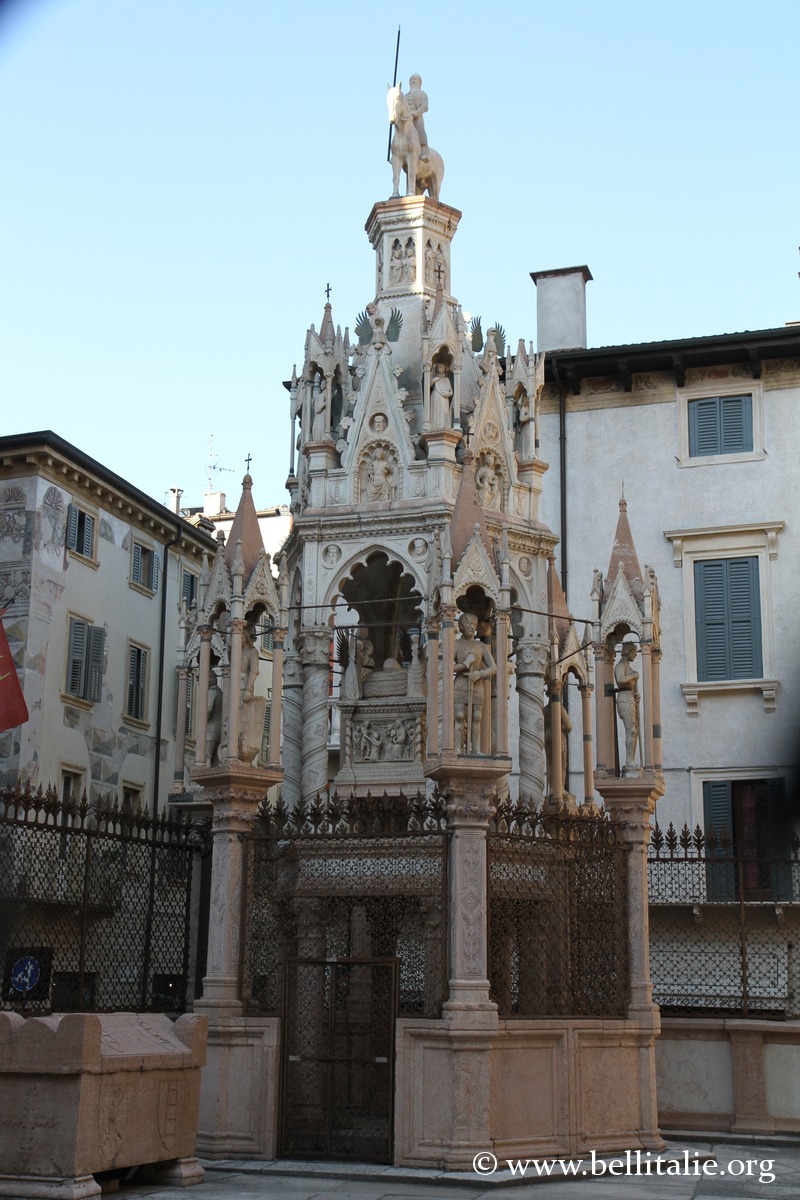
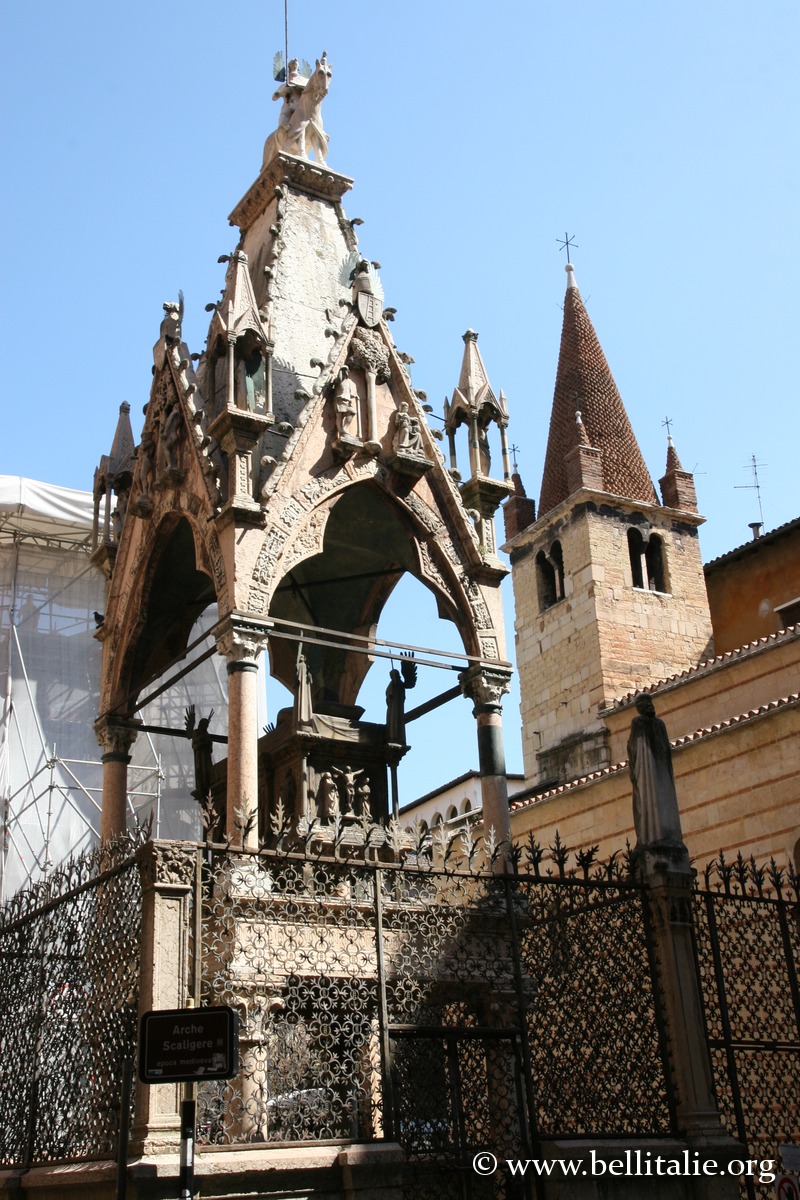
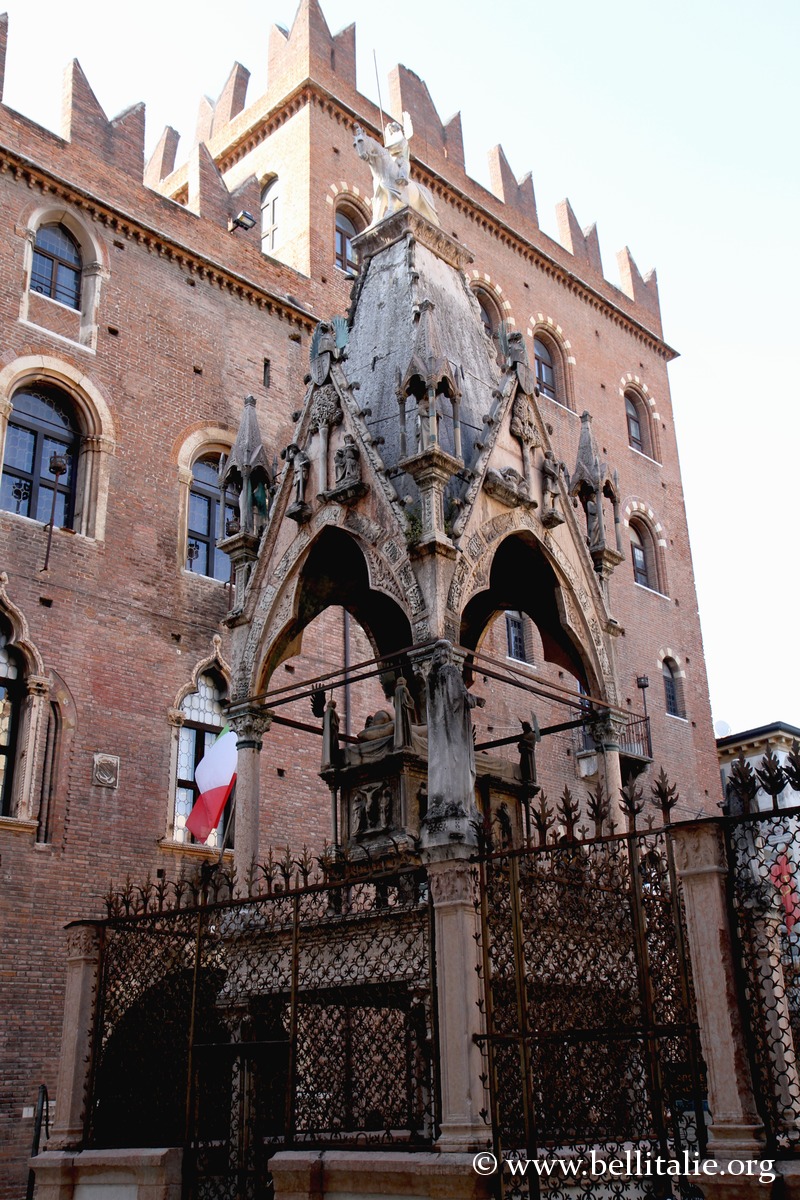
In the courtyard of the church of Santa Maria Antica, the Scaligeri Tombs are remarkable Gothic constructions of the 14th century, mausoleums with the tombs of members of the Della Scala (or Scaligeri) family, including that of the great lord Cangrande I, to whom Dante dedicated the Divine Comedy, and those of Mastino II and Cansignorio.
The Scaligeri, a family of merchants, ruled Verona from 1262 to 1387. They had these burials erected in the very centre of the city. Their monumental tombs are richly decorated with Gothic pinnacles, spires and statues. The complex is open from June to September, and the rest of the time closed by a beautiful old movable wrought-iron gate on which the family coat of arms can be seen.
Information
- Wikipedia article: en.wikipedia.org
- Tourism portals: www.turismoverona.eu
Map
If you see this after your page is loaded completely, leafletJS files are missing.

- What to see in Verona
- History of Verona
- Verona Arena
- Piazza delle Erbe and Lamberti Tower
- Castelvecchio and Scaliger Bridge
- Basilica of Sant’Anastasia
- Verona Cathedral Complex
- Basilica of San Zeno
- Roman Theatre of Verona
- Church of San Fermo
- Museum of Frescoes and Juliet’s Tomb
- Church of Santa Maria in Organo
- Verona’s Monuments


Comments