


Far from rivers, large lakes and the sea, Milan was nevertheless for a long time a navigable city thanks to large canals, the navigli. Moreover, from the Middle Ages, a navigable circular moat ran alongside the city walls, the Cerchia dei Navigli. It then had three small ports: Santo Stefano located on the current square of the same name, San Marco at the level of Piazza San Marco, and Sant’Eustorgio which became the Darsena di Porta Ticinese.
Even today the Darsena is fed by the waters of the Ticino via the Naviglio Grande, which rejoin the Ticino at Pavia near its confluence with the Po via the Naviglio Pavese.
Locks connected the Cerchia to the ports, such as the Conca di Viarenna of which a basin remains today, which connected the Darsena di Porta Ticinese, and which was the first navigation lock in Europe.
Abandoned in the 19th and 20th centuries, polluted and buried, the canals were redeveloped over recent decades, attracting the bourgeoisie and becoming popular and lively places, with their bars, restaurants, craftsmen, cycle paths, and nightlife venues.
The Navigli district, around the Darsena with the Naviglio Grande and Naviglio Pavese, is a pleasant district of Milan, located two kilometres from the Duomo, outside the sometimes stifling city centre. A flea market is held along the Naviglio Grande on the last Sunday of the month.
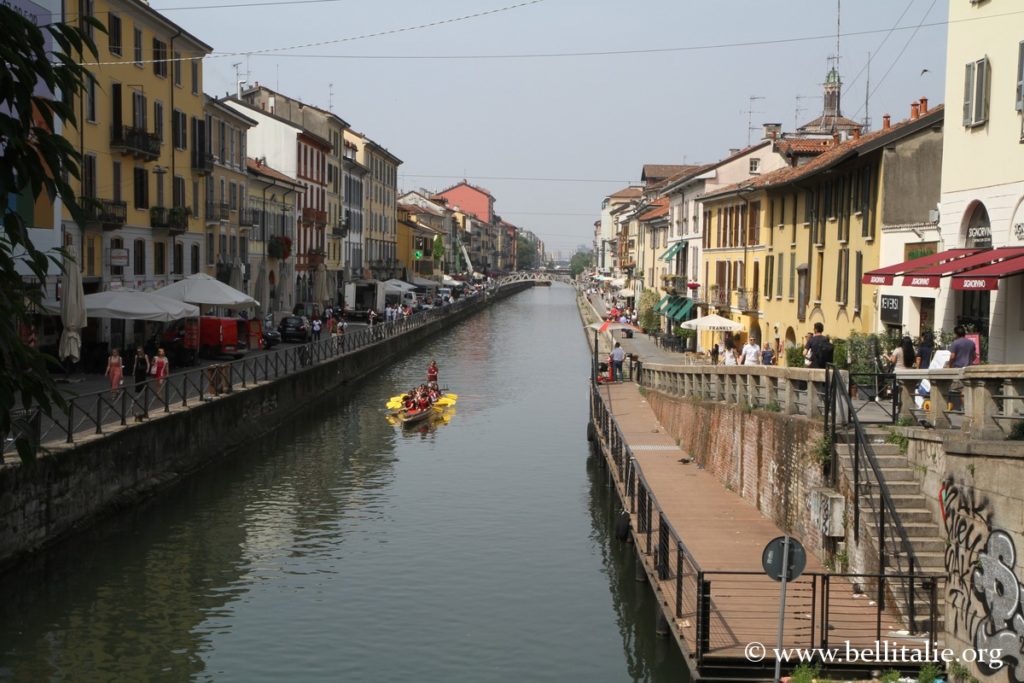
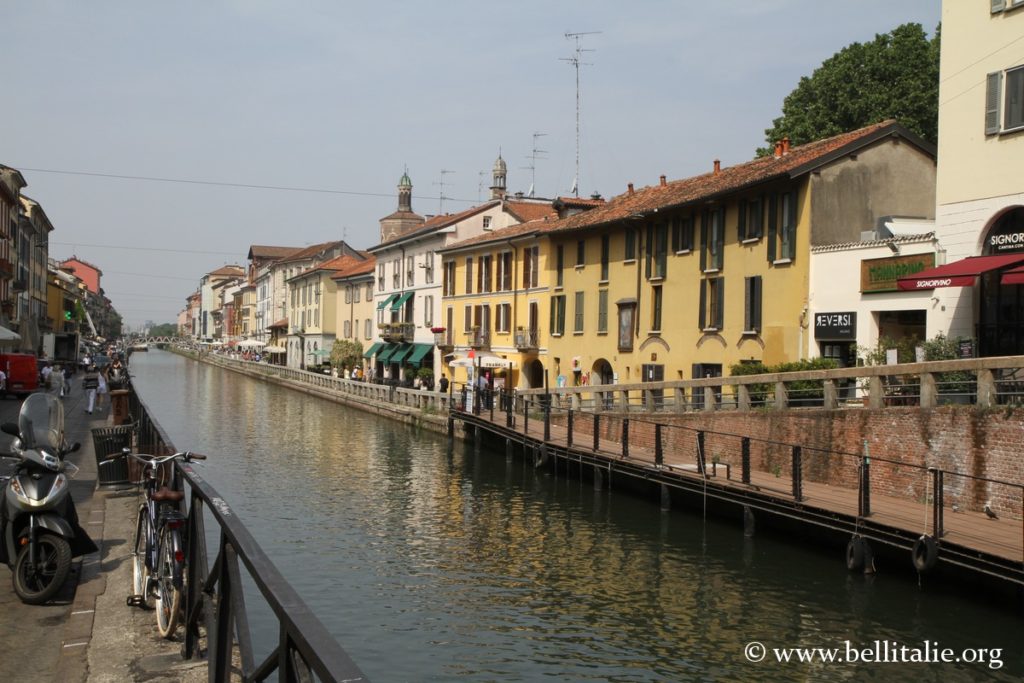
The navigli were built from the 12th century, originally intended to connect the city to the rivers Ticino and Adda and to irrigate the surrounding area, then to communicate with the Po and the large lakes. They thus allowed Milan to acquire a river port and to facilitate trade.

Navigli di Milano (Author: Regione Lombardia, source)
The Ticino Canal (Naviglio Grande) linked Milan at the beginning of the 13th century. Leonardo da Vinci completed the canal linked to the Adda and Lake Como in the 15th century, the Naviglio Martesana, with an ingenious system of locks, and at the beginning of the 19th century Napoleon had the Naviglio Pavese completed from the confluence of the Po with the Ticino via Pavia.
These canals supplied commercial traffic, thanks to flat-bottomed barges, which could go upstream by towing by horses or men.
They were partly abandoned in the 19th and 20th centuries, with railways and roads replacing river transport. They were even polluted and buried, before being redeveloped over recent decades, notably with the Navigli district around the Darsena which has become popular and lively.
Naviglio Grande
The Naviglio Grande, linking Milan to the Ticino river since the beginning of the 13th century, is the oldest of the navigable canals connected to the city centre, dating back to the 13th century. Along its most central part it is still lined with old low houses, today occupied by numerous bars, pubs and restaurants. It has become one of the liveliest areas of Milan, especially in the evening, with the city’s youth.
Every Sunday the antique market is held here, and near its end the Vicolo dei Lavandai with old wash-houses.
Further on, San Cristoforo sul Naviglio is a church made up of two buildings, one Romanesque and the other Gothic, with a 15th-century bell tower, and which often marked the entrance to Milan for boatmen.
Naviglio Martesana
It was Leonardo da Vinci who completed the Naviglio Martesana linked to the Adda and Lake Como in the 15th century, with an ingenious system of locks. It is also called Naviglio Piccolo.
Today, cycle paths run alongside it as far as Cassano d’Adda 30 kilometres further on.
Naviglio Pavese
At the beginning of the 19th century Napoleon had the Naviglio Pavese completed, joining the Ticino near the confluence of the Po at Pavia. 33 km long, the canal has only been navigable since 1819. It still has the 12 locks that made it possible to descend the 52 metres of difference in level. 2.4 km from the centre, the Chiesa Rossa retains meagre vestiges of its long history.
An extension of the Lambro cuts the Navigli to the west, heading north to the site of the Milan Expo 2015.
Map
If you see this after your page is loaded completely, leafletJS files are missing.
Information
- Wikipedia page: en.wikipedia.org
- Tourist portals: www.in-lombardia.it
- What to see in Milan
- Itinerary ideas for visiting Milan
- Milan Cathedral
- Sforza Castle of Milan
- Victor Emmanuel II Gallery in Milan
- The Last Supper and Santa Maria delle Grazie
- Milan’s La Scala
- Basilica of Sant’Ambrogio in Milan

- Piazza dei Mercanti and Medieval Milan
- Selection of hotels and luxury hotels in Milan
- Leonardo da Vinci Museum of Science and Technology
- Brera Art Gallery
- Basilica of San Lorenzo, Milan
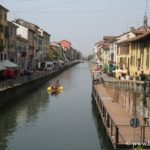
- Navigli District and Canals of Milan
- San Maurizio al Monastero Maggiore in Milan
- Milan Civic Archaeological Museum
- Basilica of Saint Nazarius in Milan
- Other Renaissance and Baroque monuments
- Neoclassical, 18th and 19th centuries in Milan
- The Museums of Milan
- Shopping, the Fashion Quadrilateral and Markets in Milan
- Squares and other sites of Milan




Comments