


Located on Piazza Castello, the Palazzo Madama (Palazzo Madama in Italian) is one of the most important buildings in the region, listed as a UNESCO World Heritage Site, and which today houses the city’s Museum of Ancient Art (Museo d’Arte Antica in Italian).
Acaja-Savoy Castle and Palazzo Madama
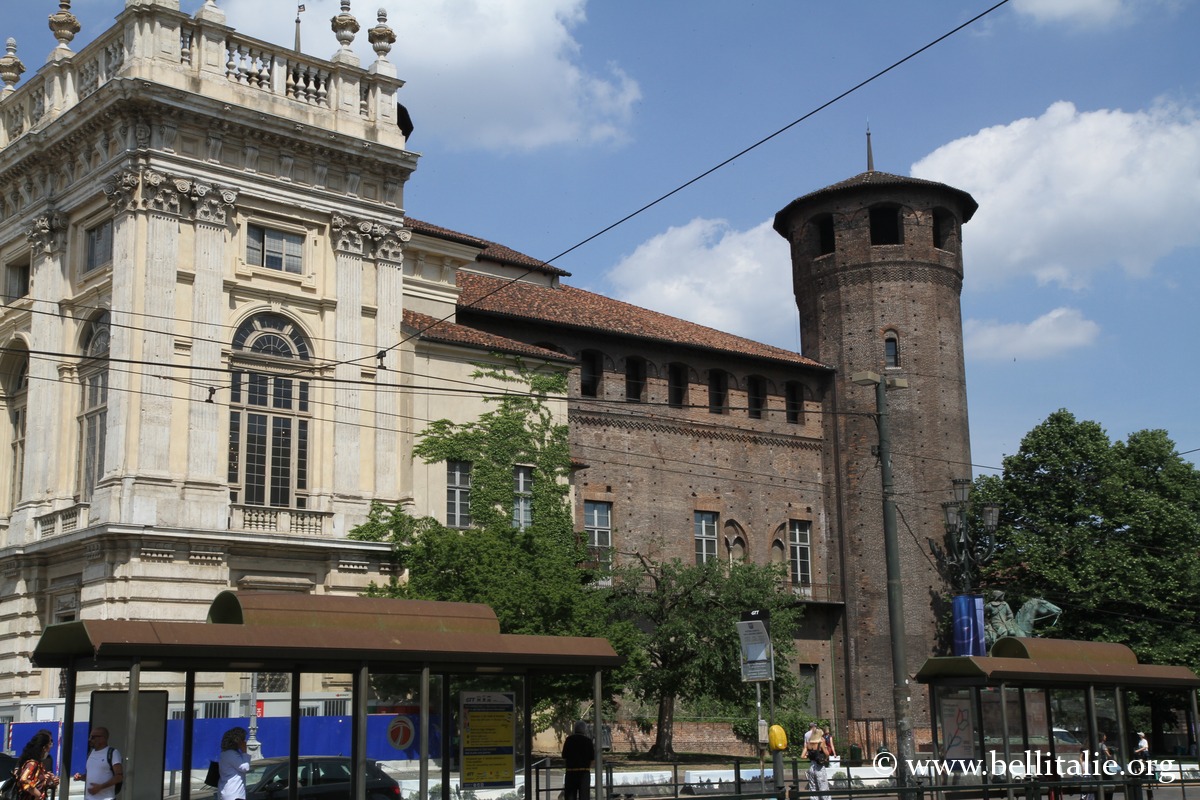
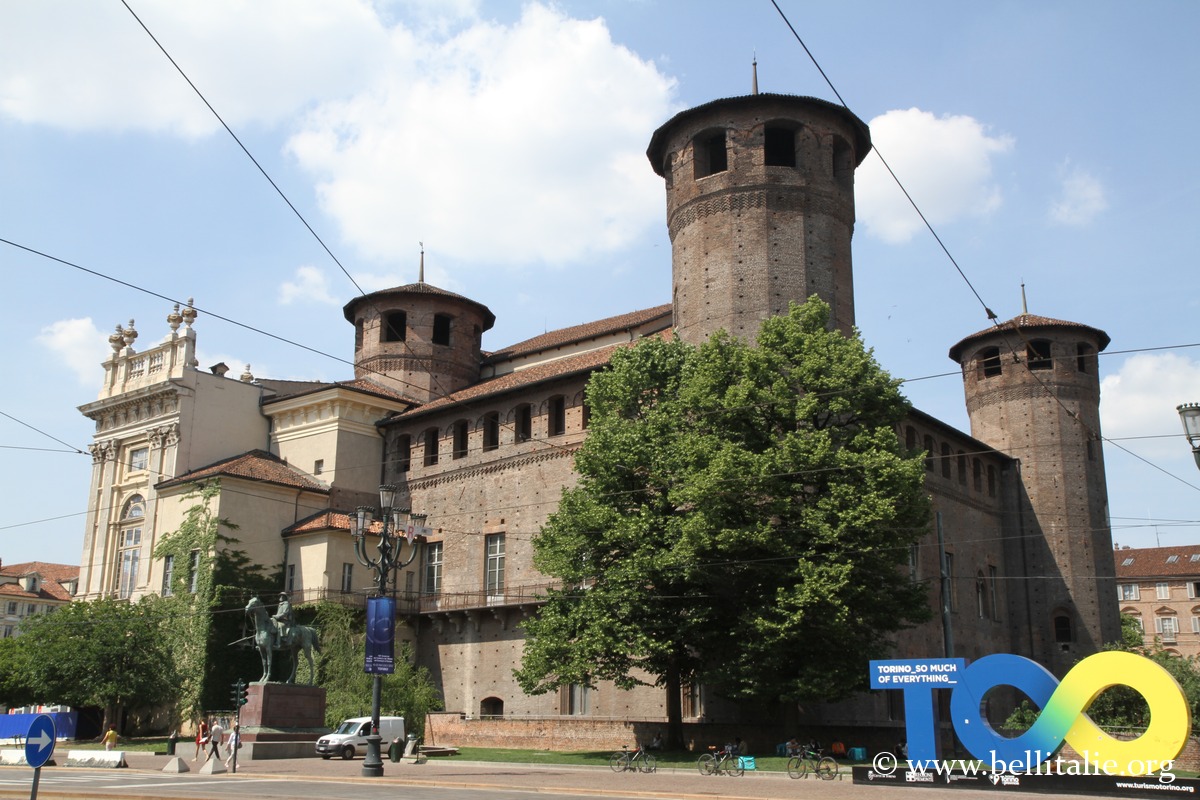
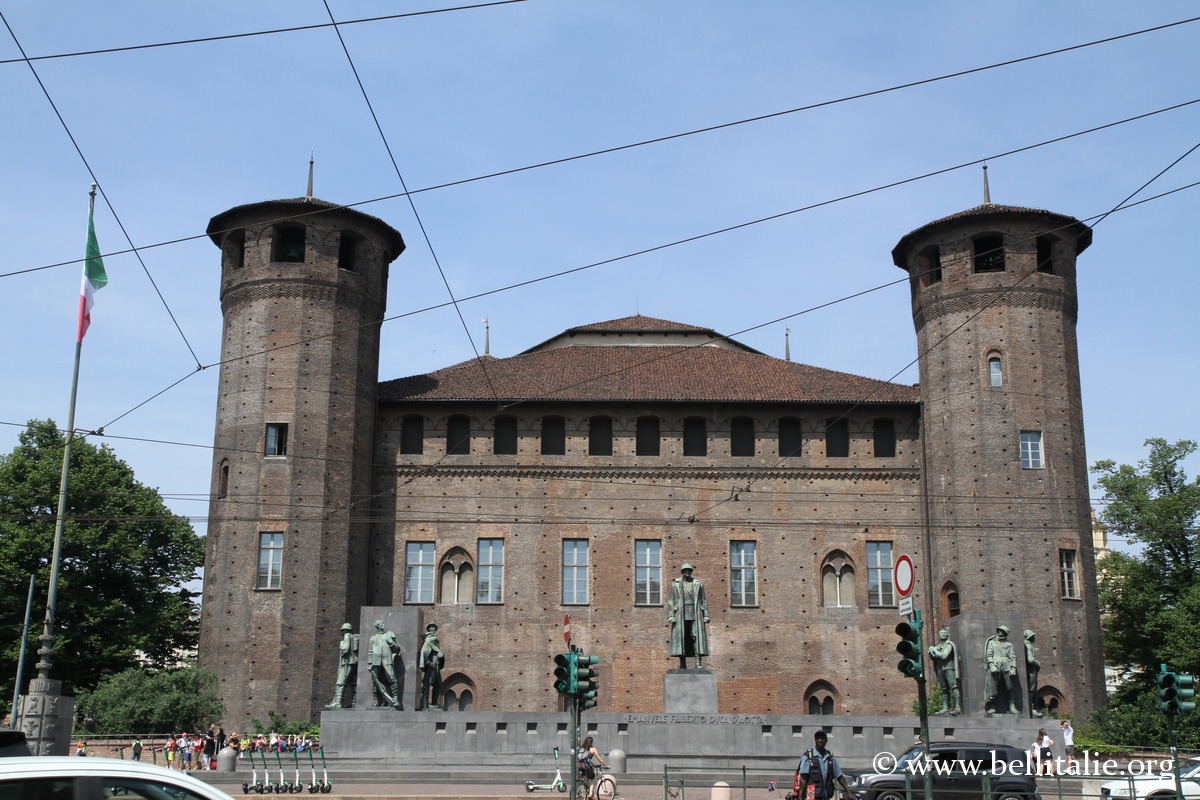
The origin of the palazzo dates back to the Decumanus Maximus Gate of Augusta Taurinorum from Roman times, which allowed access to the city from the Po side, which was fortified after the fall of the Roman Empire and converted into a castle in the Middle Ages. One of the facades of this monument has remained with its medieval towers.
it was a possession of the Marquis of Monferrato in the 13th century, then of the Savoy-Acaja in the 14th century. The latter undertook its enlargement and embellishment to make it the center of power of the city, including the creation of an inner courtyard. However, after the disappearance of the Acaja in 1418, it had a secondary role, and mainly housed guests of the Savoy family.
But it gained prestige in 1637, when Marie-Christine de Bourbon of France, regent of Savoy, made the palazzo her residence. With her began the luxurious embellishment, notably having the courtyard covered. With Marie-Jeanne-Baptiste de Savoie-Nemours, the other regent who resided there, to whom the name Palazzo Madama is owed, Filippo Juvarra undertook a grandiose Baroque project in white stone, at the beginning of the 18th century, which was only carried out on a single facade in 1721 by covering the medieval building. It also includes the superb staircase of honor.
Having had various functions subsequently, since 1934 the palazzo has housed the city’s Museum of Ancient Art.
Museo Civico d’Arte Antica
The Museum of Ancient Art (Museo Civico d’Arte Antica), installed here in 1934, which was reopened in 2006, presents Italian and European artistic works dating from the early Middle Ages to the Baroque era. It has 35 rooms on 4 floors including a panoramic level.
The basement is dedicated to medieval art, the ground floor to Gothic and Renaissance art, arranged with the section of stone sculptures and goldsmithing from the 12th and 13th centuries, then that of sculptures, objects and paintings from the 13th and 16th centuries.
The first floor is devoted to painting, art and furniture of the 17th and 18th centuries. Then the second floor presents the decorative arts of all eras with fabrics, glass, ceramics, etc. It possesses one of the most important porcelain collections in the world.
In the 15th-century tower called the Tower of Treasures are exhibited some of the most emblematic works of the museum: the Portrait of a Man by Antonello da Messina, the book of hours of the Très belles Heures de Notre Dame by Jean de Berry or the objects from the Cabinet of curiosities of Charles Emmanuel I of Savoy.
Map and address
Piazza Castello, 10122 Torino
If you see this after your page is loaded completely, leafletJS files are missing.
Information
- Official website: www.palazzomadamatorino.it
- Wikipedia article: en.wikipedia.org
- What to see in Piedmont
- Turin
- Saint Michael’s Abbey, La Clusa
- Lake Maggiore
- Susa Valley and Chisone Valley

- Susa
- Lake Orta
- Cuneo and Surroundings
- The Langhe
- Montferrat
- Roero and surroundings
- Asti
- Alba
- Domodossola and Val d’Ossola
- Valsesia
- Sanctuary of Mount Oropa

- Saluzzo and surroundings
- Usseaux and Fenestrelle Fort
- Casale Monferrato
- Vercelli
- Ivrea, Canavese and Biellese
- Novara

- What to see and do in Turin
- Turin in 1 day, 2 days and more
- Piazza Castello in Turin
- Royal Palaces and Museums of Turin
- Egyptian Museum of Turin
- Mole Antonelliana
- Turin Cathedral of Saint John the Baptist
- Piazza San Carlo in Turin
- Palatine Gate of Turin
- Royal Palace of Venaria
- Other monuments and places in Turin

- Stupinigi Hunting Lodge
- Rivoli Castle
- Moncalieri Royal Castle
- Turin Hills



Comments